 Home
Home
Water Jetting
Professional Water Jetting Service in Rhode Island and Massachusetts
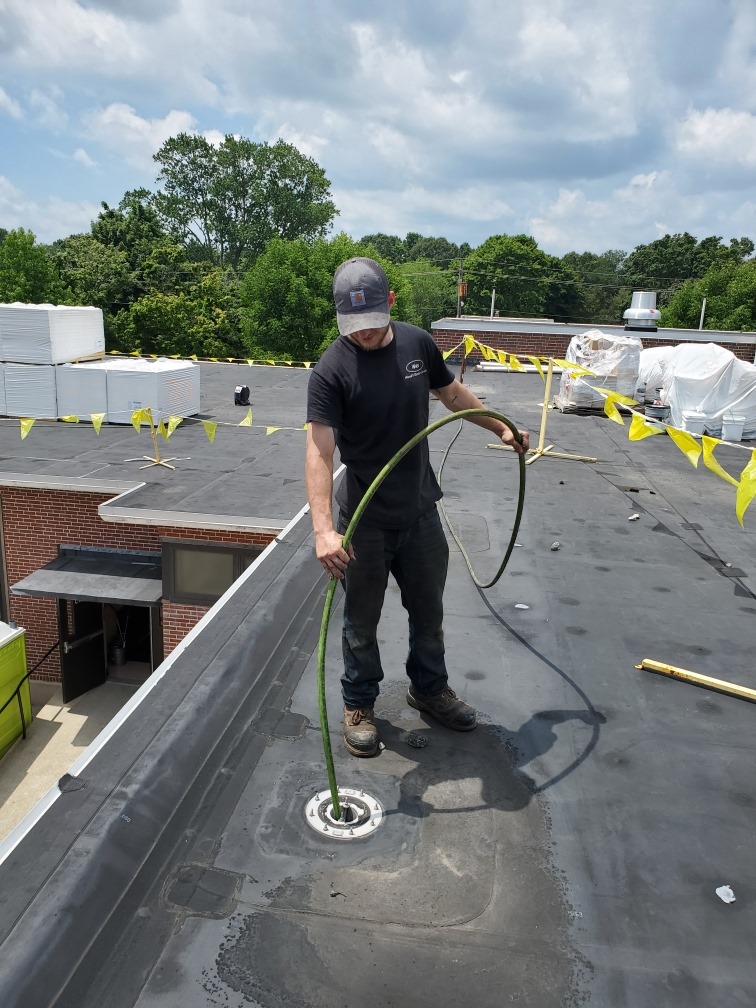 Some clogs don't respond to a drain snake. When grease has built up along the walls of a pipe for years, when tree roots have worked their way deep into a sewer line, or when a recurring blockage just keeps coming back no matter how many times it's been cleared — that's when water jetting is the right call.
Water jetting, also called hydro-jetting, is the most powerful drain cleaning method available. Instead of using a mechanical cable to break through a clog, it sends pressurized water through your pipes at up to 4,000 PSI — enough to blast away built-up grease, dissolve mineral scale, cut through root masses, and flush every trace of debris downstream. When the job is done, you don't just have a cleared clog. You have a pipe that flows the way it did when it was new.
At Wood's Rooter, we've been performing professional water jetting for homes and businesses across Rhode Island and Southern Massachusetts since 2007. Our equipment includes a range of specialized nozzles designed for specific blockage types, and we never jet a pipe without inspecting it first. That commitment to doing it right — not just doing it fast — is what four generations of our family have built this company on.
Water/Hydro Jetting FAQs
Water jetting — also called hydro-jetting — uses pressurized water delivered through a specialized hose and nozzle to clean the interior of drain and sewer pipes. The key difference from drain snaking is what it does to the pipe itself. Snaking breaks through a blockage and restores flow. Jetting scours the entire pipe wall, removing the grease coating, mineral buildup, sediment, and root debris that accumulates over time and keeps catching new material. A jetted pipe doesn't just drain — it drains at full capacity, the way it did when it was installed.
Professional water jetting equipment operates at pressures typically between 1,500 and 4,000 PSI, depending on the pipe size, material, and nature of the blockage. At Wood's Rooter, we calibrate the pressure to the specific pipe — which is why we inspect first. The same pressure that's perfectly safe for a modern PVC sewer line could be too aggressive for a fragile older clay pipe. We adjust accordingly, and we would never jet a pipe we believed couldn't handle it safely.
When performed by a trained professional on pipes that are in adequate condition, water jetting is safe. The critical safeguard is the camera inspection we conduct before every jetting job. If the camera reveals a pipe that is severely cracked, badly deteriorated, or made of a material that wouldn't hold up to the pressure we need to use, we'll tell you that and recommend a different solution — such as pipe lining or targeted repair. We don't jet first and ask questions later.
Many homes in New England were built with clay or cast iron drain pipes, and the age of those pipes varies widely. Some clay pipes from the 1950s are still in excellent structural condition; others are fragile. The material alone doesn't determine whether jetting is safe — the condition does. Our camera inspection tells us exactly what we're working with. If the pipe can handle it, jetting works extremely well on older lines. If it can't, we'll be honest about that and explain your options.
A typical residential water jetting job — a main sewer line or a stubborn kitchen drain — takes one to two hours, including the camera inspection. Commercial jobs involving longer runs of pipe, multiple lines, or heavy grease accumulation may take longer. We'll give you an honest time estimate when you call.
For most residential properties with no unusual drain stress, once every one to two years is a reasonable maintenance interval if you're using jetting proactively. If you've had recurring clog problems, we'd suggest starting with a jetting service to reset the pipe and then reassessing based on how quickly buildup returns. For commercial properties — particularly restaurants and food service operations — quarterly or biannual jetting is typically the standard, depending on volume.
Probably, yes. When a drain clogs consistently despite being cleared, it's a strong sign that the inside of the pipe has accumulated coating — grease, soap residue, or mineral buildup — that keeps catching new debris. Snaking clears the blockage but doesn't remove that coating. Jetting strips it out and resets the pipe interior, which dramatically increases the time between clogs. If you're on a cycle of recurring clogs, jetting is almost always the more cost-effective long-term solution.
Yes — and more thoroughly than snaking. We use a root-cutting nozzle designed specifically to cut through root masses in sewer lines. Jetting will clear the line more completely than a cable, and the high-pressure water flushes the debris downstream so it doesn't repack further along the pipe. That said, jetting doesn't prevent roots from growing back — roots will always seek water sources. We often recommend pairing jetting with a Root-X herbicide treatment, which kills root cells and significantly slows regrowth. A follow-up camera inspection after clearing will also show you the condition of the pipe and whether any structural repair is worth considering long-term.
Grease-X is a professional-grade line of drain treatment products formulated specifically for use alongside water jetting equipment and ongoing commercial drain maintenance. We use three products from this line: Grease-X Jet, an emulsifier added to jetting water that breaks down grease on contact; Grease-X Biozyme, a concentrated biological treatment applied after jetting that continues digesting fats, oils, and grease between service visits; and Grease-X Biodeodorizer, which eliminates pipeline odors by digesting their source rather than masking them. These are commercial-grade products — not the enzyme treatments you find on a store shelf — and they're particularly effective for restaurants, commercial kitchens, and grease trap lines. We can discuss whether a Grease-X maintenance program makes sense for your property.
Yes, and it's one of the best applications for the service. Grease trap inlet and outlet pipes accumulate FOG (fats, oils, and grease) rapidly in any food service operation. Jetting with Grease-X Jet additive dissolves and clears that buildup efficiently. For properties with a grease trap, we often recommend combining a jetting service with a Grease-X Biozyme application for ongoing enzymatic maintenance between visits. This reduces the frequency of emergency service calls and helps restaurants stay compliant with local health and plumbing codes.
Rental hydro-jet machines are available, and for a very straightforward outdoor application — like a surface-level patio drain — some homeowners use them. But for drain and sewer lines, we strongly advise against it for a few reasons. First, using high-pressure water in a pipe you haven't inspected risks damaging a cracked or deteriorated section you didn't know was there. Second, the nozzle selection matters enormously — the wrong nozzle at the wrong pressure can cause more problems than it solves. Third, the equipment renters typically have access to is significantly less powerful than professional-grade jetting machines, which limits effectiveness on anything beyond surface-level clogs. For anything involving a sewer line, main drain, or commercial application, professional equipment and expertise are worth the investment.
Yes, they're the same service. Water jetting and hydro-jetting are interchangeable terms for the same high-pressure pipe cleaning process. You'll also occasionally see it called "sewer jetting" or "pressure jetting." Different companies use different names for the same technology. At Wood's Rooter, we use all of these terms to refer to our pressurized water pipe cleaning service.
Yes. For restaurants, property managers, apartment complexes, schools, and other high-use properties, we can set up a maintenance schedule based on your property's drain volume and history. Proactive scheduled jetting costs significantly less than emergency service calls, reduces the risk of health code violations, and extends the life of your drain system. Call us to discuss what a plan would look like for your operation — we'll give you a straight answer on what interval actually makes sense for your specific situation, not the one that maximizes our visit frequency.
What to expect when you call Wood's Rooter for water jetting

Step 1:
Video camera inspection before anything else. We never jet a pipe we haven't inspected. Before any high-pressure water goes into your line, one of our technicians runs a camera through it to assess the pipe's condition, locate the blockage, and confirm the material and diameter. This tells us whether jetting is the right approach, and it determines the correct nozzle type and pressure setting. It also protects you — we won't recommend a service that isn't appropriate for your pipe.

Step 2:
Select the right nozzle Based on what the camera shows, we choose the nozzle that matches the job. Rotating nozzles for grease and sediment buildup, penetrating nozzles for dense compacted blockages, root-cutting nozzles for sewer line root intrusion, and flushing nozzles for clearing debris downstream after jetting. Using the right nozzle isn't a minor detail — it's the difference between a thorough clean and a partial one.

Step 3:
High-pressure jetting The jetting hose is fed into the pipe through a cleanout access point. Pressurized water is expelled from the nozzle, hitting the pipe walls in all directions simultaneously as the hose advances through the line. The water breaks apart blockages and strips accumulated material off the pipe interior, flushing it downstream toward the main sewer.