 Home
Home
Pump Service & Repair
Sump Pump and Sewage Ejector Pump Service in Rhode Island and Massachusetts
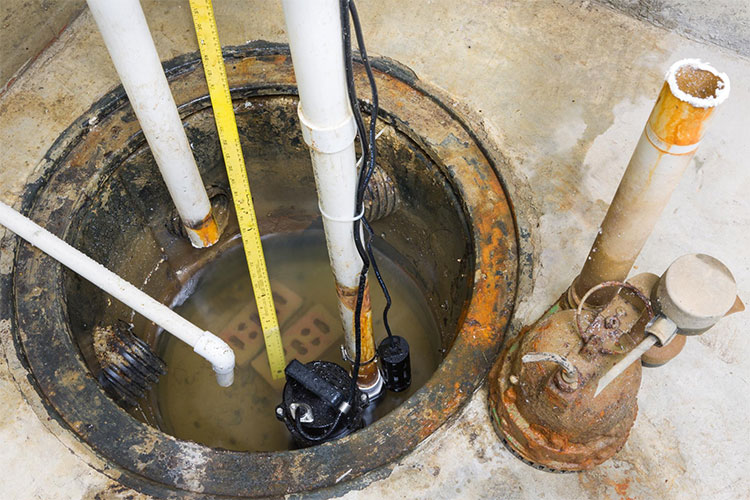
A pump failure is rarely convenient. For most homeowners, it happens at the worst possible moment: before a storm, during a heavy rain, or in the middle of a night when the basement is already taking on water. A failed sump pump means your basement is unprotected. A failed sewage ejector pump means the bathroom, laundry room, or wet bar in your finished basement cannot drain. Neither situation is one you want to leave unaddressed.
At Wood's Rooter, we've been servicing, repairing, and replacing pumps for homeowners and businesses across Rhode Island and Southern Massachusetts since 2007. We work on sump pumps, sewage ejector pumps, grinder pumps, macerator pumps, and commercial lift station systems. When you call us, you'll get an honest diagnosis, a clear explanation of your options, and a straight answer about whether your pump can be repaired or needs to be replaced. We don't default to the more expensive option.
Pump Service & Repair FAQs
A sump pump removes groundwater and stormwater from the sump pit in your basement or crawl space to prevent flooding. It handles clean or relatively clean water from rain and ground infiltration.
A sewage ejector pump moves wastewater from below-grade fixtures (like a basement bathroom, laundry room, or utility sink) up through the ejector line and into the main sewer.
It handles waste that cannot drain by gravity because the fixture sits below the level of the main drain line. They are completely different systems with different service requirements. If you are unsure which one you have, describe the location and the symptoms when you call us and we will help you identify it.
The answer depends on the pump's age, the nature of the fault, and the repair cost relative to a new unit. If the pump is under 7 years old and the fault is mechanical (a stuck float switch, a clogged intake, a failed check valve), repair is almost always the right choice.
If the pump is over 10 years old, the motor has burned out, or the repair cost approaches the price of a new pump, replacement is typically the smarter investment.
We will give you a straight assessment after diagnosing the unit. We do not push replacement when repair is appropriate, and we will not recommend repair when replacement makes more sense.
Most residential sump and ejector pumps have a service life of 7 to 10 years under normal conditions. Pumps that run frequently due to a high water table, heavy fixture use, or poor sizing for the application may wear out sooner.
Conversely, a pump in an area with low groundwater that activates infrequently may last longer. We recommend having any pump inspected once it reaches 5 to 7 years old, and annually after that, to assess its remaining service life before a failure occurs.
For most Rhode Island and Massachusetts homes, yes. The main vulnerability of a standard sump pump is that it requires household electricity to run. Power outages in RI and MA frequently occur during the exact storms that cause groundwater to rise fastest.
A battery backup system keeps the pump running when utility power fails, providing protection precisely when it is most needed. Given the cost of cleaning up a flooded basement, which can run from several thousand dollars for minor water damage to tens of thousands for significant flooding affecting flooring, drywall, and mechanical equipment, a battery backup system typically pays for itself the first time it activates during an outage.
We install and test battery backup systems alongside pump replacements or as standalone upgrades.
A sump pump that runs without cycling off is usually a sign of one of three things: a stuck or misadjusted float switch that is not reading the water level correctly, a continuous source of groundwater entering the pit faster than the pump can clear it (which can indicate a drainage problem around the foundation), or a pump that is undersized for the water table conditions at your property.
Constant running puts serious wear on the motor and significantly shortens the pump's remaining life. Call us to have it diagnosed before the motor burns out entirely.
Yes, and it should be addressed promptly. Grinding typically indicates debris caught in the impeller, a damaged impeller, or a worn bearing. Rattling can indicate loose components or debris bouncing around the casing.
Both of these faults, left unaddressed, accelerate wear on the motor and often lead to complete pump failure. The good news is that in many cases, the repair is straightforward if it is caught before the motor is damaged. Call us to have it diagnosed.
The simplest test is to pour a bucket of water slowly into the sump pit until the float rises to the activation point. The pump should start automatically and clear the water from the pit within a minute or two, then shut off when the water level drops. If the pump does not activate, or if it activates but does not clear the water, or if it runs after the pit is empty, call us to have it inspected. We recommend performing this test before each spring storm season, not after the first heavy rain reveals a problem.
This is almost certainly an ejector pump problem. If the pump has stopped working, waste that enters the ejector basin cannot be pumped out, and the basin fills. The smell comes from waste sitting in the pit rather than being cycled through. This should be treated as urgent because the basin has a finite capacity and continued use of the fixtures will overflow it. Stop using the below-grade bathroom and laundry fixtures and call us as soon as possible. This is one of the situations where we prioritize same-day service.
Yes, and it is one of the most common causes of ejector pump failure. Wipes labeled "flushable," feminine hygiene products, paper towels, and other solid materials that are flushed from a basement bathroom or laundry room all pass through the ejector system.
Unlike regular sewer systems, the ejector pump must handle everything that enters it. Even grinder and macerator pumps, which are designed to macerate solids, can be damaged or jammed by dense or stringy materials. Only toilet paper and human waste should be flushed from fixtures connected to an ejector system.
Permit requirements vary by municipality and by the scope of the work. A direct pump-for-pump replacement using the existing basin and piping typically does not require a permit in most RI and MA communities.
Work that involves modifying the discharge line, altering the basin, or changing the pump system configuration may require one. When you call us, we will advise you on what your specific situation requires and handle any permit coordination that is needed.
A grinder pump is a type of sewage pump that grinds waste into a fine slurry before pumping it under pressure through a small-diameter force main to the municipal sewer. Parts of Rhode Island, particularly in areas served by the Narragansett Bay Commission pressure sewer system, use grinder pump systems rather than gravity sewer connections.
A sewage ejector pump, by contrast, pumps waste at low pressure over a short distance (typically from a basement to the main drain line within the same property). Grinder pumps are more powerful and handle longer distances and higher pressure requirements.
We service both. If you are unsure which type you have, your sewer bill or the NBC system map can confirm whether you are on a pressure sewer system.
For most residential properties, once a year is a reasonable baseline. We specifically recommend scheduling a pump inspection in late winter or early spring, before the snowmelt and heavy rain season begins.
For properties with a high water table that causes the sump pump to run frequently, or for ejector pumps serving high-use fixtures, biannual inspections may be warranted.
If your pump is over 7 years old, annual inspections become more important because the likelihood of a developing fault increases significantly after that point.
First, if there is any risk of electrical equipment being contacted by rising water, shut off the circuit breaker for that area of the basement before entering. Do not enter standing water near electrical panels, outlets, or equipment.
Call us immediately and let us know the situation is urgent. While you wait, move items off the floor if it is safe to do so. Do not attempt to operate a pump that is sitting in water without confirming it is safe to do so. We will advise you on the phone about immediate steps while we are on the way.